The History of The Catlow
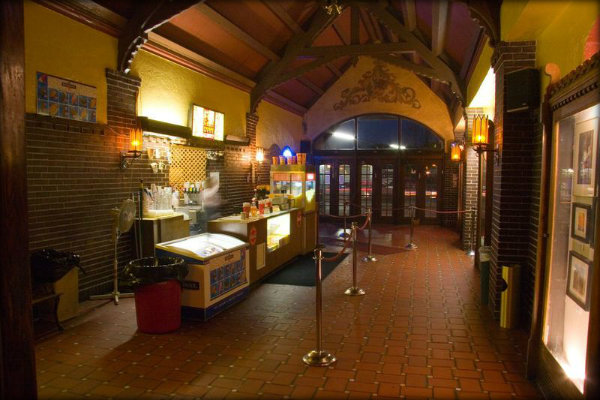
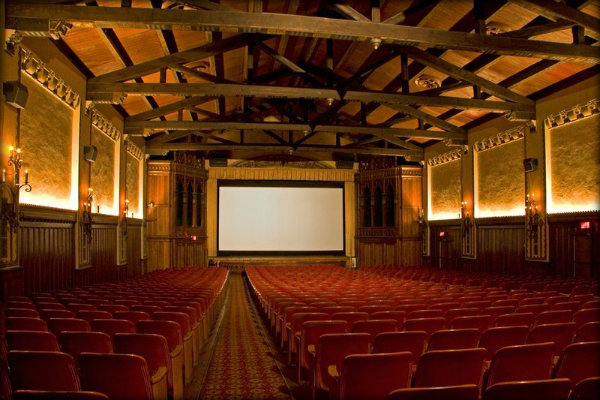
The dream of owning a theater became a reality for Barrington business man Wright Catlow. The Catlow Theater, designed in the Tudor Revival style to portray a medieval English hall, opened in May of 1927. The architectural firm Betts & Holcomb of Chicago designed the theater and T.S. Willis of Janesville, Wisconsin, was hired as the builder.
What truly stands out in the historical architecture is the interior works by renowned sculptor and designer Alfonso Iannelli. Iannelli, who worked closely with Frank Lloyd Wright and his sons, created exquisitely-detailed stenciling on the ceiling of the theater, walls and beams. He also sculpted "gargoyle" heads that border each ceiling truss. His fine craftsmanship is illustrated with the three coat-of-arms wall murals, iron wall sconces, and the woodwork on both organ lofts.
The Catlow Theater's first feature film was "Slide, Kelly, Slide." Vaudeville acts on Sunday nights were a major attraction to residents and their neighbors throughout the Northwest Suburban area until 1933. Fan dancer Sally Rand was said to be one of the last live acts to appear on The Catlow's stage. The installation of the Cinemascope screen ended stage appearances since the screen overlapped on the stage area.
Wright retired in January of 1964 and he sold the theater to Ed Skehan, a film booker for The Catlow. Despite the competition of television, the theater survived by charging reasonable prices. In 1988, Skehan sold to a group of investors led by Tim O'Connor and Roberta Rapata, owners of Boloney's Sandwich Shop. The new owners restored the theater to its original condition, as much as possible, and devised a business plan of showing films at their first and second-run theatrical releases in order to continue to charge a low admission price. This formula has been successful ever since.